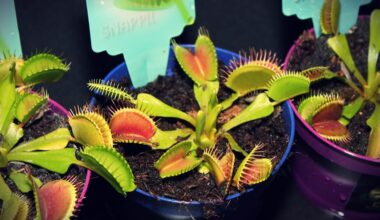

Is your Venus flytrap dying? With a little troubleshooting and care, you can nurse your plant back to health.
In this guide, I share nine possible reasons your Venus flytrap is dying, and fast and easy solutions to improve its health.
Scrappy Gardeners is reader-supported. As an Amazon Associate, we earn from qualifying purchases when you click on links in this post.
9 Reasons Your Venus Flytrap Is Dying (and How to Save It)
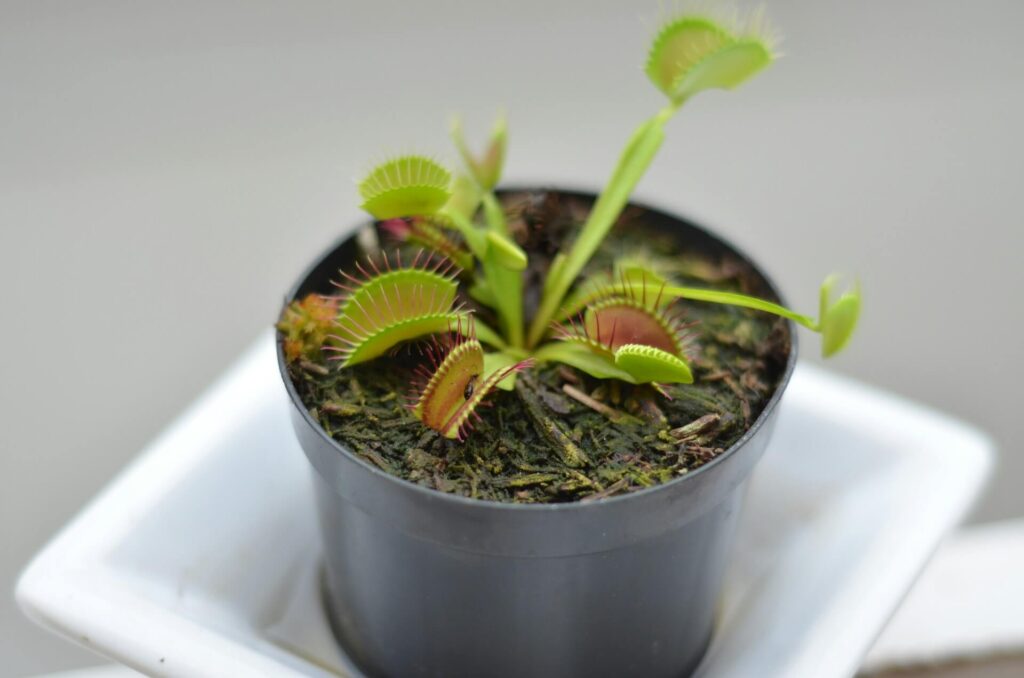
If your plant is looking a little sad these days, it might be due to a variety of common issues, from using the wrong water to not enough sun.
Here are the top reasons your plant might be dying. And more importantly, what you can do today to save it.
1. Overwatering or Underwatering
Overwatering your Venus flytrap is a common issue that can lead to root rot. Aim to keep the soil consistently moist but never soggy.
On the flip side, underwatering can be just as harmful (or even more so). The plant’s soil should never be allowed to dry out completely. To maintain proper moisture, check the soil every few days by gently pressing your finger into it; it should always feel damp. If it’s dry, water it immediately.
Solution
An easy way to ensure your plant gets the right amount of water is by using a water tray, aka the bottom-watering method. Place your plant in a tray filled with about an inch of water (no more than one-third of the pot), and you’ll never have to worry about over- or underwatering again. Refill the pot with more water only when you notice the water has been almost fully absorbed.
Important: Do not overfill the water tray — if the water is halfway up the pot, it’s too much, and this would be considered overwatering and could lead to root rot.
2. Watering With Tap Water

If this is your first carnivorous plant, you might be surprised to know that tap water is bad for them.
Why? Because Venus flytraps (and other carnivorous plants like sundews) are sensitive to the minerals and salts often present in tap water. These elements can accumulate in the soil, potentially leading to toxicity that weakens or kills the plant.
So, a Venus flytrap dying or looking sad and unhealthy could be due to something as simple as water quality.
Solution
To avoid this, water your Venus flytrap exclusively with distilled water, rainwater, or water treated by reverse osmosis (RO). Purified water may still have some minerals, so it’s best to avoid that. I give my Venus flytraps and sundews distilled water using the bottom-watering method, and they’re doing great.
3. Overfeeding
I get it — it’s fun to feed your Venus flytrap, but it is possible to overfeed it. If your plant is dying, it might be because you’re giving it more food than it can handle. Your plant expends significant energy to digest food, so striking a balance is essential.
If each trap is constantly digesting prey, it can exhaust the plant’s resources and ultimately harm its health.
Solution
Feed your Venus flytrap every two to three weeks to ensure it gets enough nutrients without overloading it. If your plant is indoors and not catching enough of its own prey, consider putting it outside next to a light or a plant grow light for a few nights every few weeks to let it feast.
The grow light attracts insects, and your plant will catch multiple bugs at once. I do this during the growing season, and it works really well. My plants catch a good amount of bugs, and then I wait a couple of weeks and do it again.
4. Feeding the Wrong Food

When my brother and I were little, he fed his Venus flytrap lunch meat to see what would happen. Well, death happened. If you’re tempted to see if your Venus flytrap likes human food, resist the urge. Yes, it may close its trap (if the piece is small enough), but the food won’t be able to properly decompose, leading to decay and potential fungal infections.
If you still feed your plant human food anyway, know that the trap will turn black and die. If you continue feeding it things you shouldn’t, the plant will also most likely die.
Solution
Limit your Venus flytrap’s diet to insects like moths, beetles, spiders, and flies. If you supplement its diet by feeding it dead insects, ensure the bug is no more than one-third the size of the trap.
Want to learn more about the food preferences of Venus flytraps? Check out these posts:
- Do Venus Flytraps Eat Spiders? Understanding Your Plant’s Eating Habits
- Do Venus Flytraps Eat Gnats, Fruit Flies, and Other Small Insects?
5. Not Enough Light
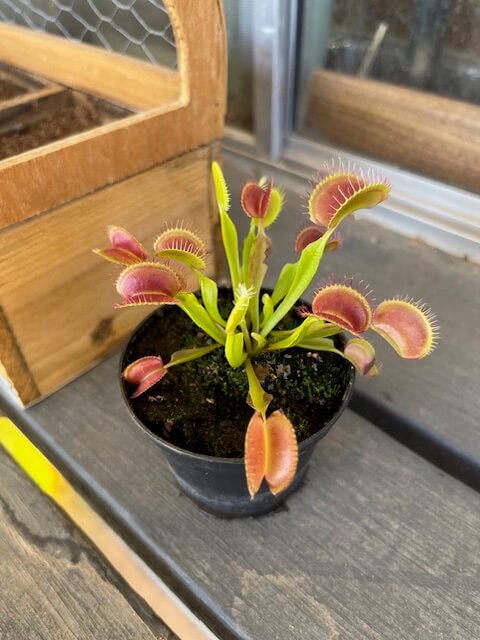
Venus flytraps are sun-loving plants, so if you give them too little, you might notice their health declining. Without ample sunlight, Venus flytraps can’t perform photosynthesis effectively, which is vital for their growth and energy production.
The lack of sunlight can lead to a weaker plant with pale leaves, less growth, and even death.
Solution
Ensure your Venus flytrap gets at least six hours of direct sunlight (or artificial light) per day during their growing season.
A grow light works great if you don’t have a good spot indoors where your plant can get ample sunlight. I keep my plant near a window under this grow light, and it works great. It’s also big enough to provide light for three of my plants at once, which is nice.
6. Inadequate Soil
Venus flytraps need a particular soil blend that mimics their natural growing conditions to thrive. This specialized mix is crucial because the wrong soil can easily harm or kill your plant. In their native habitat, Venus flytraps grow in nutrient-poor, well-draining, acidic soil.
The typical potting soil you can buy in stores or online will not work for carnivorous plants and can even harm their health or lead to death. The same goes for dirt from your backyard.
If you bought your plant from a retailer like Home Depot, Trader Joe’s, Wal-Mart, or another chain, you’ll want to check its soil composition. Big-box retailers don’t often use the correct soil, which could be causing health issues for your plant.
Solution
Use a combination of sphagnum peat moss and perlite or silica sand. This mixture provides the necessary aeration and drainage while maintaining the low-nutrient environment Venus flytraps love.
You can also look for special carnivorous plant soil blends that use sphagnum peat moss, perlite, and sand if you don’t want to buy these ingredients separately. I bought this carnivorous plant soil blend on Amazon two years ago, and my plants are still healthy and happy today, so I recommend it.
7. Excessively High or Low Temperatures
If you keep your Venus flytrap outside, the weather can make or break its health. These plants prefer moderate climates and are sensitive to harsh extremes.
Optimal growth occurs when daytime temperatures range from 70 to 95 degrees Fahrenheit, and nighttime temperatures range from 50 to 75 degrees Fahrenheit.
If you live somewhere where temperatures get higher than 100 degrees consistently (and you haven’t set up something to keep your plant cool and hydrated, like a bog garden), this could be why it’s struggling.
It’s also essential to shield your plant from extreme cold, avoiding temperatures below freezing, or the soil could freeze and kill your plant.
Solution
If you live somewhere with extreme winters or summers, move your plant indoors.
For example, I live in Arizona, so I keep my plants outdoors from winter through spring and only move them inside if the temperature falls below freezing for more than a few nights in a row. I keep them indoors for the entire summer since temps are consistently over 100 degrees.
Update: I decided to test this theory this summer by attempting to keep my two Venus flytraps and sundew outside all summer in Phoenix (summer 2024), but they just couldn’t handle the heat. I was hoping they would be acclimated since I put them outside full-time starting back in March, but no such luck.
I tried moving them into a shadier spot on my patio so they’d still get about six hours of direct sun and have some cover for the rest of the day. But the heat was just too much for them.
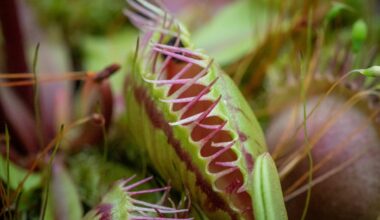
All three plants had extremely slow growth (my Venus flytrap that’s pictured above with the red traps now has extremely tiny traps (they’re cute in a sad way), and my sundew looked like it had fully died. I moved them inside full-time again with a grow light at the end of July, and my sundew is already getting new growth (yay!).
So, if you live in a state with temps over 100 in summer, use this as a cautionary tale.
8. Winter Dormancy

If you notice your Venus flytrap turning black and its growth is slowing — and it’s late fall or winter — it may actually just be going through winter dormancy. Your plant may appear dead during dormancy, but it should bounce back in the spring, so don’t toss it in the trash!
When kept outside, Venus flytraps will naturally enter a state of dormancy as daylight hours decrease, typically from late November until early March.
Solution
If your plant is dormant, there isn’t too much to do other than keep it slightly moist (reduce watering but don’t let it dry out), don’t feed it, and still give it some sun if possible.
9. Natural Lifecycle
If you notice some traps turning black and dying, don’t worry — this could be nothing more than the natural growth cycle of your plant. As with all living organisms, Venus flytraps go through stages of growth and renewal. The process of older traps blackening and eventually dying (just cut them off) is a typical pattern, allowing the plant to conserve energy and focus on developing new, healthy traps.
However, if you notice a widespread blackening of the plant beyond the occasional old trap, it could indicate a more serious problem.
Ensure your plant is receiving the right amount of light, the appropriate soil, and that it’s not exposed to extreme temperatures.
Keep Your Venus Flytrap Alive (and Thriving)

Carnivorous plants are surprisingly resilient. With the right water and sunlight, your plant can live for years.
Continue your education on how to best care for your plant by reading the ultimate guide to Venus flytrap hiberation.