

Venus flytraps eat a lot of things, from spiders to moths, but what about the peskiest insect of them all: the fungus gnat? Do Venus flytraps eat gnats, and if so, are they as nutritious as other insects?
Keep reading to learn all about the eating habits of Venus flytraps and if small insects like fungus gnats and fruit flies are on the menu.
Will Venus Fly Traps Eat Gnats?
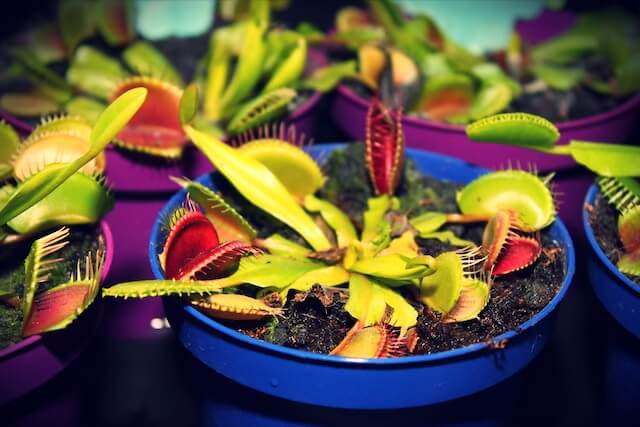
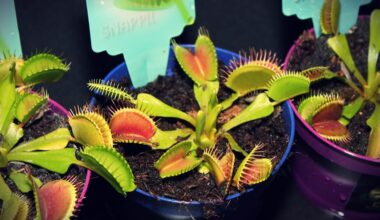
Yes, Venus flytraps eat gnats, but usually only if the flytrap is young (about one to two years old) with small traps (also called lobes). Larger and more mature Venus fly traps will have larger lobes, and fungus gnats and fruit flies may be too small to activate the plant’s trigger hairs.
So, while your Venus flytrap most certainly would eat fungus gnats, the insects may simply be too small to trigger the traps.
However, if you’re looking for a carnivorous plant that will help you easily tackle a fungus gnat infestation, might I suggest the sundew or butterwort? (See the section below for more details on this.)
Why Do Venus Flytraps Eat Gnats and Other Insects?
In the nutrient-poor environments where Venus flytraps thrive, conventional sources of nutrition like nitrogen are hard to come by. This is why these plants have adapted to become carnivores. By trapping and digesting insects like gnats, fruit flies, moths, beetles, spiders, and more, Venus flytraps can supplement their diet with vital nutrients obtained from their prey.
The digestion process begins once the trap shuts. The Venus flytrap plant releases digestive enzymes, similar to those in a human stomach, that break down the insect.
After several days to a week, the trap reopens, revealing only the indigestible exoskeleton of the insect. In the case of a gnat, due to its small size, there might not be any visible remains.
Can a Diet of Only Gnats Sustain a Venus Flytrap?
While gnats can be part of a Venus flytrap’s diet, they cannot solely sustain the plant. Fungus gnats are quite small and provide fewer nutrients than larger insects. A healthy Venus flytrap diet should include a variety of insects for optimal nutrient intake.
How Do Venus Flytraps Digest Gnats and Other Bugs?
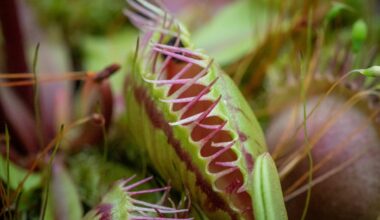
Venus flytraps are carnivorous plants with a unique feeding mechanism. The traps of Venus flytraps are lined with sensitive hairs that, when triggered by the presence of an insect, cause the trap to snap shut within a fraction of a second. This rapid movement is a result of changes in internal cell pressure.
Once the Venus flytrap lobes close, the inner surface secretes digestive enzymes, breaking down the insect’s soft tissues into essential nutrients. Venus flytraps primarily rely on insects as their source of nitrogen, as this carnivorous plant grows in nutrient-poor environments.
What Insects Do Venus Flytraps Eat?
The Venus fly trap diet primarily consists of ants, beetles, spiders, and other crawling arthropods. However, they aren’t picky eaters. If a gnat happens to land on a Venus flytrap and actually triggers the trap to close, it will be just as appetizing to the carnivorous plant.
These plants use a unique trapping mechanism involving modified leaves that snap shut when triggered by prey. If a gnat or any insect touches the sensitive hairs inside the trap twice within around 20 seconds, the trap will close, sealing the insect inside.
Maintaining a diverse diet is essential for the health and well-being of Venus flytraps. A varied diet ensures access to a wide range of nutrients, promoting optimal growth and development.
The Best Gnat-Eating Carnivorous Plants
If you have a fungus gnat infestation (or a fruit fly problem), don’t panic. Carnivorous plants will happily come to your rescue, and they’ll be way more effective than those sticky traps.
While a smaller Venus flytrap may eat some gnats, other carnivorous plants are better options. Get rid of fungus gnats quickly and easily with any of the carnivorous plant options below:
Sundews (Drosera)
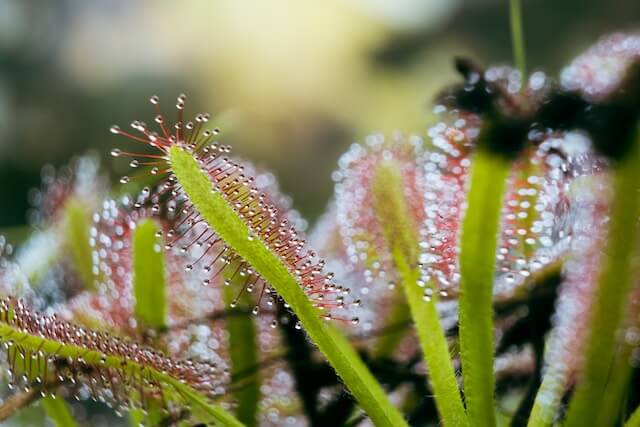
Sundews are an absolutely excellent choice for getting rid of a fungus gnat problem (they’ll also eat fruit flies). These plants have tentacle-like structures covered in a sticky substance that traps insects landing on them.
Here’s a close-up of my sundew covered in gnats. Zoom in and you can see it has seven+ gnats on one tentacle alone.
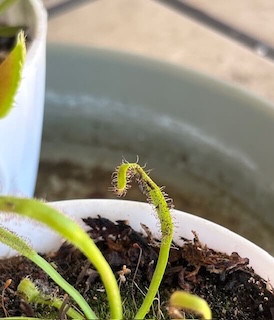
Here’s how it works: The gnat becomes ensnared by the sticky dew, and the sundew plant’s enzymes slowly digest it. The tentacle curls when it’s “eating” a bug.
Sundews come in different shapes and sizes, but all are highly effective at catching gnats. Below, you can see my sundew enjoying a feast of gnats on pretty much all of its tentacles.
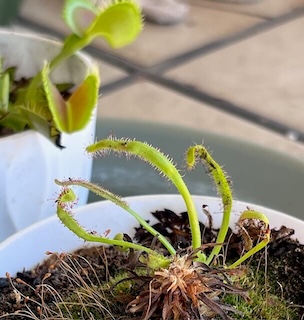
If you’re new to sundews, try the Cape sundew (Drosera capensis), which is a great plant for beginners. This is what I have, and it’s not only adorable but great at eating gnats.
Here’s another one of my sundews. Zoom in and you’ll see some gnats on its tentacles, too.

Butterworts (Pinguicula)
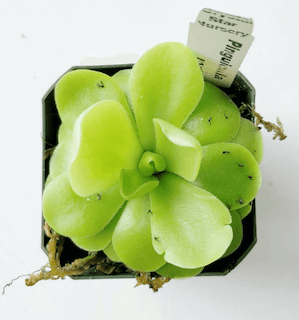
Butterworts, which look like a cute, carnivorous succulent, are amazing at getting rid of fungus gnats. These plants use a flypaper trap mechanism to catch gnats and fruit flies. Their leaves secrete a sticky substance that attracts and traps the insects.
Once a gnat is stuck, the leaf slowly rolls inwards to encase the prey and begin digestion. Butterworts are particularly good at catching small flying insects like gnats and fruit flies, so you won’t have the same issue of them not triggering traps as you do with Venus flytraps.
Bladderworts (Utricularia)

Bladderworts are aquatic or semi-aquatic carnivorous plants that use suction traps to catch their prey. While they’re more known for catching tiny aquatic organisms, some terrestrial species can catch small flying insects like gnats and fruit flies.
Get Rid of Gnats With Carnivorous Plants
There’s nothing worse than a fungus gnat infestation in your houseplants. And while Venus flytraps eat gnats, they’re not as good at it as sundews and butterworts.
So keep your Venus fly trap happy by ensuring it gets beetles, moths, and spiders, and let your other carnivorous plants handle the gnats.
Frequently Asked Questions
What bugs can I feed my Venus flytrap?
Venus flytraps can eat a variety of insects and arachnids. This includes flies, beetles, spiders, and even ants. The size of the insect should be appropriate to the size of the plant’s trap — ideally, no larger than one-third the size of the trap.
Are Venus flytraps good for pest control?
While Venus flytraps are fascinating plants that capture and eat insects, they’re not particularly effective for pest control. Each trap can only catch and digest a few insects before it dies and a new one grows. This makes them unsuitable for controlling larger populations of pests. Also, Venus flytraps require specific care conditions, which might make them less practical as pest control solutions.
What plant kills gnats?
Several carnivorous plants are effective at catching and killing gnats. These include sundews, butterworts, and bladderworts. Sundews and butterworts, with their sticky leaves, can be particularly effective against gnats and are fairly easy to grow for beginners.
How hard is it to keep a Venus flytrap alive?
Venus flytraps are not necessarily difficult to care for, but they do have very specific needs. They require lots of light, prefer a humid environment, and need a dormant period in the winter. They also require a specific type of soil (a mix of sphagnum peat moss and sand or perlite) and distilled water or rainwater, as tap water often contains minerals that can harm the plant. If you can provide these conditions, a Venus flytrap can thrive under your care.

5 comments
Comments are closed.