
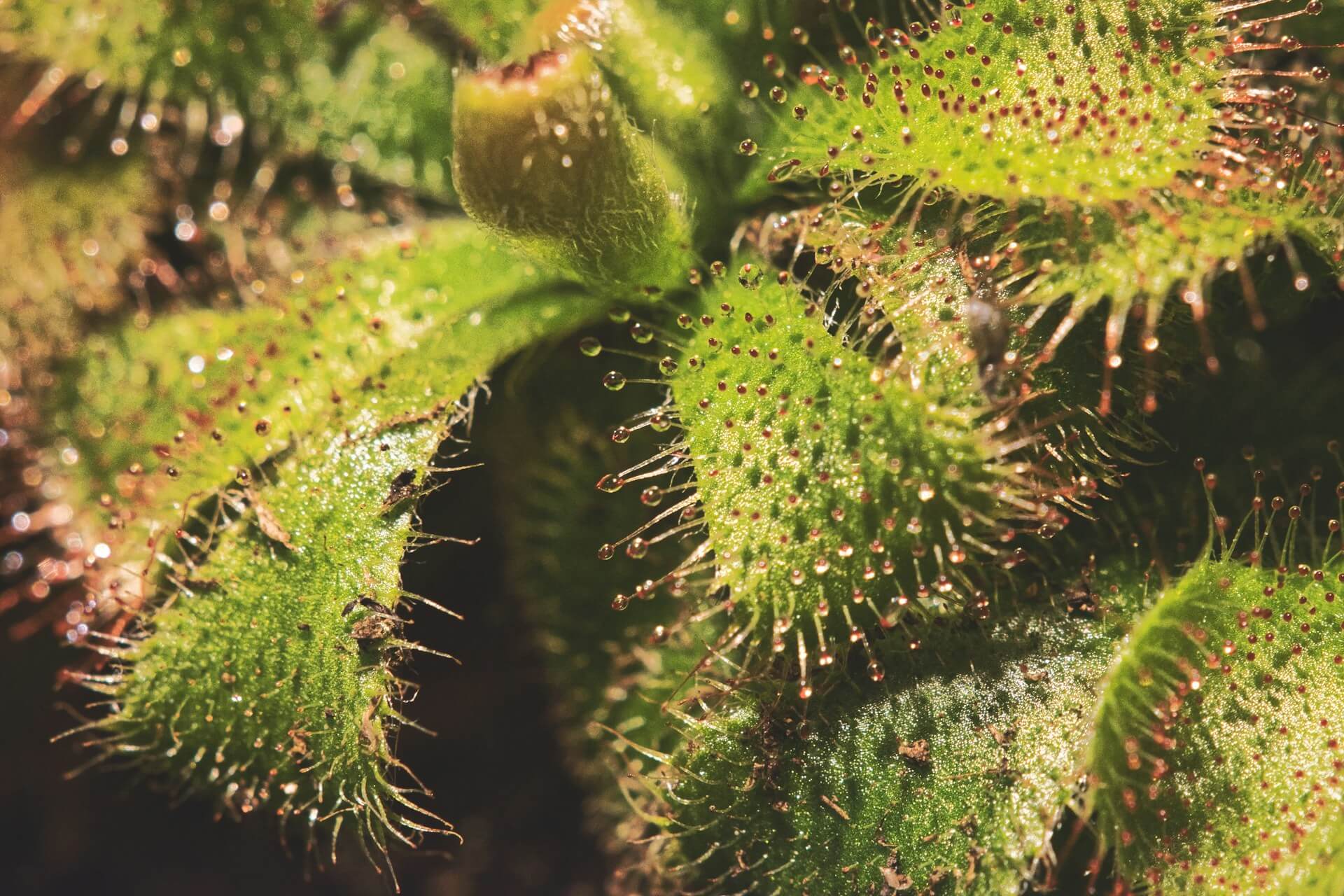
It might sound too good to be true — plants that eat mosquitoes — but it isn’t (for the most part). Most carnivorous plants will happily eat mosquitoes and other pesky bugs, but there are some caveats.
Keep reading to learn the five best mosquito-eating plants (and eight mosquito-repelling plants) to create an outdoor space that keeps bugs at bay year-round.
Scrappy Gardeners is reader-supported. As an Amazon Associate, we earn from qualifying purchases when you click on links in this post.
5 Carnivorous Plants That Eat Mosquitoes
Carnivorous plants are not only a fun addition to your garden or home, but they also serve a functional purpose — eating pesky bugs like mosquitoes, flies, gnats, and more.
Here are five types of carnivorous plants that eat mosquitoes.
1. Sundew (Drosera)
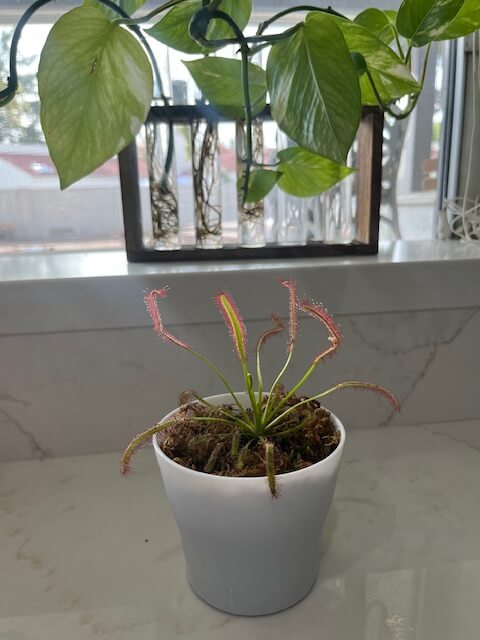
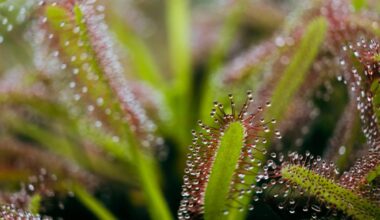
Don’t let the sundew’s pretty red tentacles fool you — this plant is covered in tiny hairs that secrete a sticky substance (like dew) that traps any bug foolish enough to land on it. While larger insects might be able to get away, this dewy beauty is able to trap and digest mosquitoes and many other bugs.
Sundews release a sweet scent that lures its prey. Once a bug is trapped, it slowly curls over it, releasing digestive enzymes. Depending on the size of the bug, you might notice it has disappeared in as little as a day, but it can take a few days for larger insects.
While growing sundews indoors is relatively easy with the right care, they won’t grow well outdoors in some regions. For example, I had mine outside in the spring, so I hoped it would be acclimated to the Phoenix weather enough to stay outside for the summer. Wrong — it died.
So, now I keep my other sundews inside during the summer and periodically put them outside at night to catch more bugs. Mine do an amazing job of catching everything from moths and mosquitoes to gnats, so there are definite perks to keeping these plants indoors. But I keep mine under a grow light, or they wouldn’t get enough sun — this grow light specifically.
However, different species of sundews, including temperate and tropical, prefer different growing conditions.
If you’re looking to buy one, I bought my sundew from Savage Gardeners on Amazon, and it arrived in great condition. They even gave me some sphagnum moss to fill the pot with, which I thought was a nice touch.
Read more: Learn how to care for sundews and which species is right for your region.
2. Aquatic Bladderworts

Aquatic bladderworts can be a fun, mosquito-eating option for those with ponds, water features, or bog gardens. These carnivorous plants have small bladder-like traps that capture and digest mosquito larvae, water fleas, crayfish, and tadpoles.
They’re found in various aquatic environments around the world, including lakes, streams, and waterlogged soils. They often form thick mats that float beneath the water’s surface, providing an effective trap for mosquito larvae.
Even better? These plants flower, adding a pretty pop of color to your pond. No one will ever know their murderous ways (unless you tell them).
3. Pitcher Plants
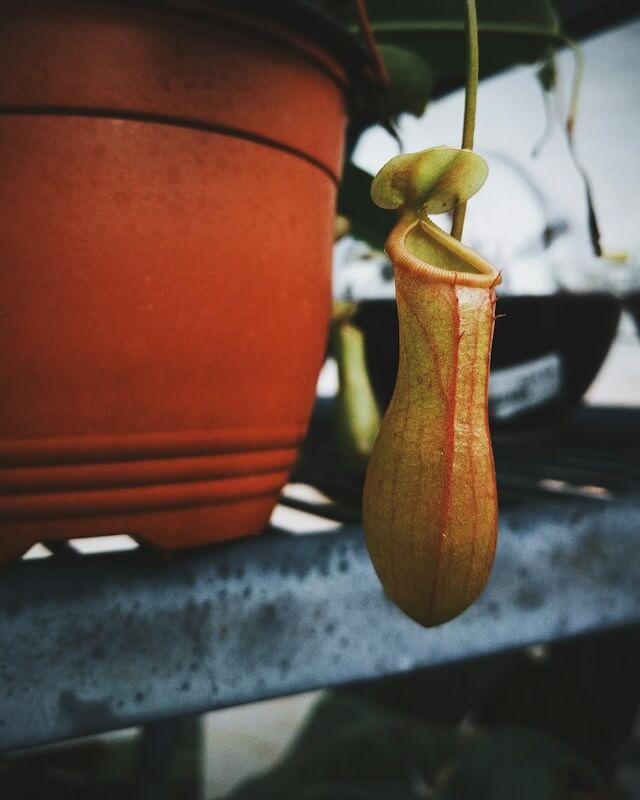
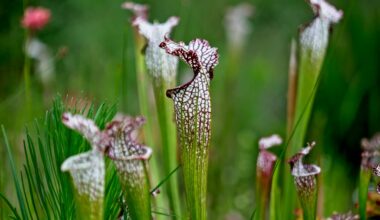
Pitcher plants are carnivorous plants known for their mosquito-catching abilities. These plants use nectar to lure and trap their prey, including mosquitoes. The upper rim of the pitcher, known as the peristome, is especially slippery when wet, causing unsuspecting bugs to slide in.
You can grow pitcher plants outdoors, but you’ll need to find the right type for your region. However, many pitcher plant species grow well in hardiness zones six through eight.
Important note: While pitcher plants do eat mosquitoes and are pretty good at it, there is risk of them becoming a larvae breeding ground. Mosquitoes can lay their eggs in the standing water found in some types of pitcher plants.
4. Venus Flytraps
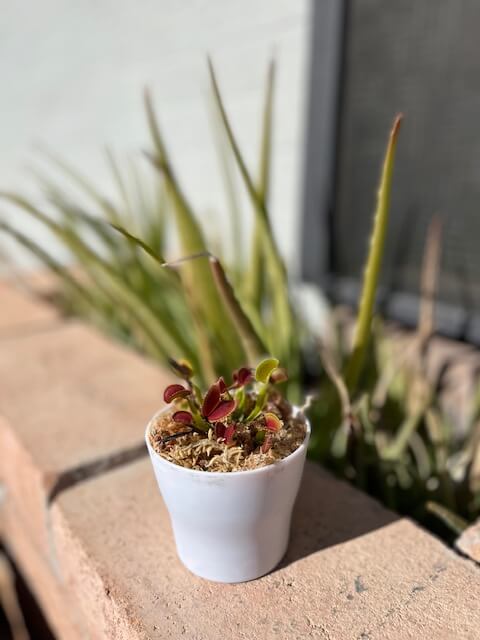
The Venus flytrap is the most famous of carnivorous plants. It uses a hair-trigger mechanism to snap shut on unsuspecting insects. When a bug touches the trigger hairs inside the trap, the carnivorous plant closes and secretes digestive enzymes, sealing the unlucky insect inside forevermore. (Or at least until it reopens and only the exoskeleton is left.)
However, their small trap size makes Venus flytraps less effective at catching mosquitoes — but it’s definitely possible, especially if they’re on the smaller side. Venus flytraps also excel at catching insects like beetles, moths, spiders, and more.
While they thrive indoors with the right care, growing them outdoors can be tricky, depending on where you live. They like temperatures of 70 degrees to 95 degrees Fahrenheit, high humidity, and damp soil.
Read more: Learn about the Venus flytrap dormancy period.
5. Butterworts (Pinguicula)
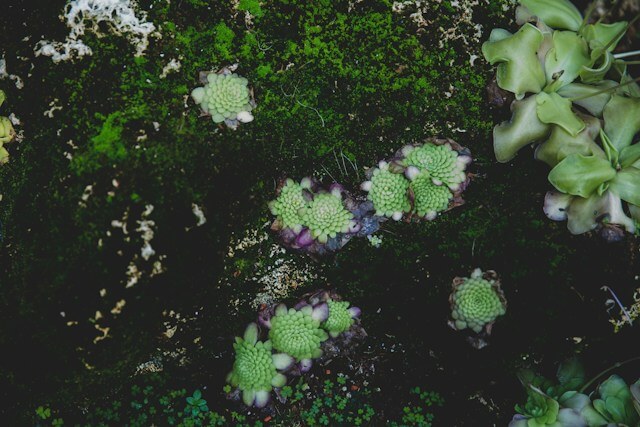
Butterworts, or Pinguicula, look like succulents with one key difference: they eat bugs. These strangely adorable plants have flat, sticky leaves that produce a greasy substance, giving them a buttery appearance and name. When a mosquito or other small insect lands on the leaf, it becomes ensnared by the sticky residue.
The butterwort then secretes digestive enzymes that break down the soft parts of the insect, absorbing the nutrients while the exoskeleton remains.
These plants prefer bright, indirect light and thrive in moist, well-drained soil with high humidity.
Overall mosquito-eating plant winner: Sundews (Drosera) and butterworts are my top carnivorous plant picks for catching mosquitoes (and other insects).
Pro tip: Do you keep your carnivorous plants outside in standing water? Treat the water for mosquitoes. You can use a product called Mosquito Bits for this. You sprinkle a few in the water, and it kills mosquito larvae (but is safe for your plants and pets — although I would still keep it out of their reach). You can also put Mosquito dunks in a watering can and water your plants with it to get rid of a gnat infestation. It works great for both scenarios.
Using Carnivorous Plants to Catch Mosquitoes

Before you get too excited, it’s important to be realistic about what a carnivorous plant can do. While these predatory plants may catch a few mosquitoes, they won’t be able to control vast numbers outdoors.
Carnivorous plants can also be challenging to grow outdoors in some areas. For example, regions with harsh summers, like the Southwest United States, or those with harsh winters, such as the Northeast, can make it hard to keep carnivorous plants alive outdoors.
However, the good news is that carnivorous plants excel at controlling bugs indoors. For example, if you bring home a houseplant with gnats, you can count on sundews and butterworts to take care of the problem for you. Or, if a small moth gets inside your house, your Venus flytrap will likely have it for dinner.
These plants are easier to grow indoors, too, assuming you follow care instructions. This includes providing lots of direct sun or using a plant grow light.
8 Plants That Repel Mosquitoes
While carnivorous plants attract and consume insects, numerous non-carnivorous plants serve as natural deterrents to mosquitoes.
These plants contain specific oils, scents, and chemicals that are unappealing to mosquitoes, making them excellent for creating a mosquito-repellent garden.
1. Lavender

Lavender, with its soothing scent, is not only great for relaxation but also acts as a mosquito repellent. The plant contains linalool and camphor, compounds that are unattractive to mosquitoes. Look for varieties that have higher camphor levels, like Provence, Grosso, and Lavandin.
2. Marigolds
Marigolds are another beneficial plant in the fight against mosquitoes. They contain pyrethrum, a compound used in many insect repellents. Marigolds do well in full sun and can be planted in pots or directly in the ground, making them versatile for garden use and as a companion plant in vegetable gardens.
Look for African, Mexican, or French marigold species for the best mosquito-repelling action, according to a study on the insecticidal activity of marigolds.
3. Peppermint
Mosquitoes dislike the strong scent of peppermint. In addition to growing the plant, crushed peppermint leaves can be rubbed on the skin for a natural repellent. Peppermint prefers a cool, moist environment but can thrive in a variety of conditions as long as it has adequate water.
4. Basil
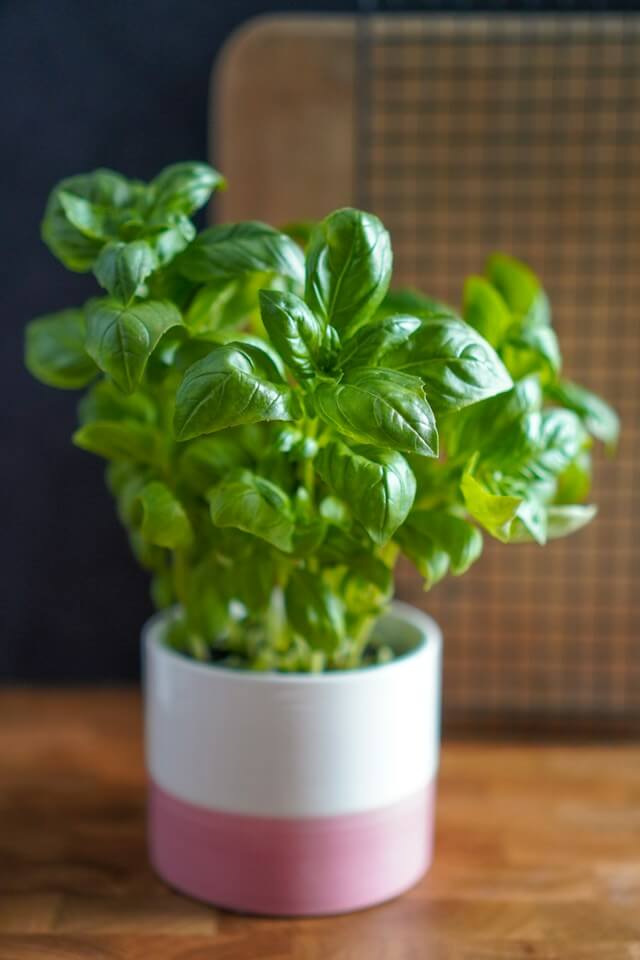
Basil isn’t just a culinary herb; it also repels mosquitoes. The herb contains essential oils, such as estragole and limonene, which are distasteful to mosquitoes. Basil requires moist, well-drained soil and plenty of sunlight, making it a great addition to kitchen gardens or windowsills.
Bruise basil leaves slightly to help it release its mosquito-fighting compounds for the best results.
5. Lemon Balm
Lemon balm contains citronellal, which has a similar effect to citronella, repelling mosquitoes with its strong lemon scent. It’s a fast-growing plant that can be invasive, so it may be best to grow it in pots to control its spread.
6. Rosemary
Rosemary’s woody scent is great for cooking and keeping mosquitoes away. It can be grown in containers or within garden beds. Rosemary is drought-tolerant and thrives in full sun with well-drained soil.
7. Catnip
Surprisingly, catnip has been found to be more effective at repelling mosquitoes than DEET, the active ingredient in many commercial insect repellents. The natural chemical nepetalactone is the repellent factor in catnip. It’s a hardy plant that grows well in full sun or partial shade and has the added benefit of attracting cats.
8. Eucalyptus
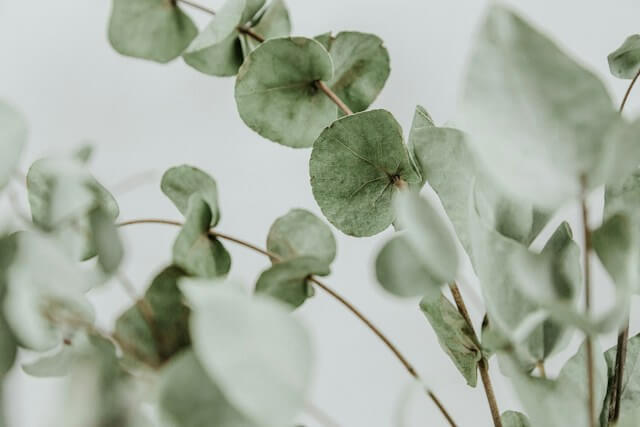
Eucalyptus leaves contain compounds that are unpleasant to mosquitoes. The plant can grow into a large tree, so it’s best suited for spacious outdoor areas. Eucalyptus trees require a lot of sunlight and well-drained soil.
Carnivorous Plants = Pest Control
While a carnivorous plant or two (or even 20) will never be able to reduce significant numbers of mosquitoes outdoors, they’re still a fun and fascinating way to get rid of some insects. (And, hey, even one dead mosquito is a good thing, right?)
However, when kept inside your home, carnivorous plants are especially helpful at catching insects like fruit flies, fungus gnats, moths, beetles, and small spiders.
Whether you choose a pitcher plant, Venus flytrap, or sundew, these exotic plants make a great addition to your home. Pair them with mosquito-repelling plants, like catnip and marigolds, for added protection.
Frequently Asked Questions
What is the best plant to eat mosquitoes?
Due to its sticky tentacles, the sundew (Drosera) is highly effective at catching mosquitoes. It lures insects with a sweet scent, and the dew keeps them trapped. While larger mosquitoes might be able to get away, sundews can definitely catch some mosquitoes. However, no carnivorous plants will be able to control outdoor mosquito populations as they can’t catch and eat enough to make a significant dent.
Do carnivorous plants help with mosquitoes?
Yes, carnivorous plants like sundews, pitcher plants, and Venus flytraps can catch mosquitoes. However, they are unlikely to control large populations on their own. In the carnivorous plant world, sundews and butterworts are the most likely to catch mosquitoes effectively.
What plants do mosquitoes feed on?
Mosquitoes don’t feed on plants; they are attracted to standing water to lay eggs. Female mosquitoes feed on blood for protein to produce eggs, while both male mosquitoes and females also feed on nectar for energy.
What smell do mosquitoes hate the most?
Mosquitoes are said to dislike the smell of certain plants like lavender, peppermint, and eucalyptus. Specifically, the compound linalool in lavender and menthol in peppermint are known to repel mosquitoes effectively.


2 comments
Can any of these be used inside of a pond?
Hi Roy, yes aquatic bladderworts can. They’re great for catching mosquitoes.
Comments are closed.