

If you own a Venus flytrap, you already know how fascinating they are. Like most carnivorous plants, flytraps eat bugs — but what about arachnids?
Do Venus fly traps eat spiders, and if so, how do they catch and digest them?
Learn all about this strangely adorable bug-eating carnivorous plant, including if it eats spiders, how often to feed it, and more.
Do Venus Flytraps Eat Spiders?
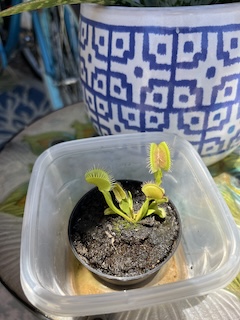
Yes, Venus flytraps do eat spiders. While flies and ants are more commonly trapped due to their smaller size and frequency, small spiders can indeed fall victim to the Venus flytrap’s swift movements.
In fact, I know firsthand that flytraps eat spiders.
How?
Because I saw what was left of a tiny spider (its exoskeleton and EYES) when my flytrap reopened one of its heads. (See photo above. Keep in mind that this was a tiny spider, but flytraps can definitely eat arachnids.)
It’s important to note that the diet of Venus flytraps primarily consists of insects, but they are opportunistic feeders and will consume any small arthropod that triggers their traps.
What Happens When a Venus Flytrap Catches a Spider?

Once a spider or any other prey is captured, the Venus flytrap goes to work. The trapped prey struggles to escape, signaling the trigger hairs to produce digestive juices.
These enzymes break down the insect or spider’s soft tissues, allowing the plant to absorb the nutrients it needs to thrive.
What Do Venus Flytraps Eat?

Venus flytraps thrive in nutrient-deficient environments. In the wild, they live in acidic bogs in their natural habitat of North and South Carolina. To ensure they get enough nutrients to survive, these plants developed a unique adaptation — capturing and digesting insects to compensate for the lack of essential nutrients like nitrogen.
Like other carnivorous plants (such as the sundew), flytraps will eat whatever falls into their trap — as long as it’s small enough.
So, what bugs can Venus flytraps eat? There’s pretty much an endless list.
While flies and ants are commonly associated with the Venus flytrap’s menu, their diet extends to a variety of small arthropods, including spiders.
Here’s a look at what these carnivorous plants enjoy eating:
- Flies (house flies, fruit flies)
- Mosquitoes
- Gnats (Venus flytraps can eat gnats but may be too small to trigger their traps)
- Moths
- Beetles
- Ants
- Wasps
- Bees
- Spiders
- Grasshoppers
- Crickets
- Aphids
- Leafhoppers
- Caterpillars
Note: This is not an exhaustive list. Venus flytraps can capture and consume various other small insects and bugs. Their diet primarily consists of flying insects and crawling arthropods that come within their range and trigger the trap’s sensory hairs.
How Venus Flytraps Catch Their Prey

Venus flytraps, like other carnivorous plants like pitcher plants and sundews, have an intricate mechanism that allows them to ensnare their unsuspecting prey. Venus flytraps work hard to catch and digest their prey to get all the nutrients they need to thrive.
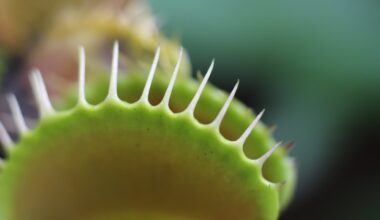
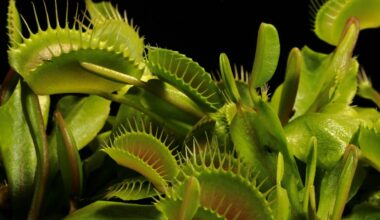
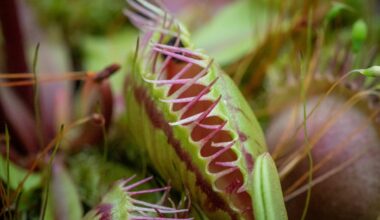
Each leaf contains two lobes connected by a hinge-like structure. The inner surfaces of these lobes are lined with specialized trigger hairs. When an insect or spider comes into contact with these trigger hairs, it stimulates the plant to snap its trap shut, trapping the prey inside.
Here’s how Venus flytraps catch bugs:
- Sensory hairs: The outer surface of the trap lobes is covered with tiny, sensitive hairs called trigger or sensory hairs. These hairs are highly responsive to touch and help the plant detect the presence of potential prey.
- Triggering the trap: When an insect or bug lands or crawls on the trap lobes and touches the sensory hairs, it triggers a series of rapid changes in the plant. The Venus flytrap evolved this mechanism to distinguish between live prey and non-prey items like raindrops or debris.
- Closing the trap: Once the sensory hairs are stimulated, the trap lobe rapidly closes, creating a cage-like structure around the prey. The closure happens in a matter of milliseconds.
- Tight closure: The trap lobes form a tight seal when closed, preventing the prey from escaping. The edges of the lobes interlock, creating a secure enclosure.
- Digestion: After trapping the bug, the Venus flytrap begins the process of digestion. It secretes digestive enzymes into the closed trap, breaking down the bug’s soft tissues into nutrients the plant can absorb.
- Nutrient absorption: Over the course of several days, the Venus flytrap absorbs the nutrient-rich liquid produced by the digestion process. This provides the plant with additional nutrients, particularly nitrogen, which is essential for its growth and survival in nutrient-poor habitats.
- Reopening or discarding the trap: Once the digestion process is complete and the nutrients are absorbed, the Venus flytrap can either reopen the trap to capture more prey or discard the trap if it is too damaged or no longer functional. You may notice traps turn black after reopening — this is normal, and you can simply cut them off if this happens. You may also be able to see bits of spiders and bugs left behind in the traps after digestion — a little gross but fascinating!
It’s important to note that Venus flytraps have limited energy reserves and require time to recover after capturing and digesting prey. For this reason, avoid triggering the trap to close unnecessarily.
How to Feed Your Venus Flytrap: A Step-by-Step Guide
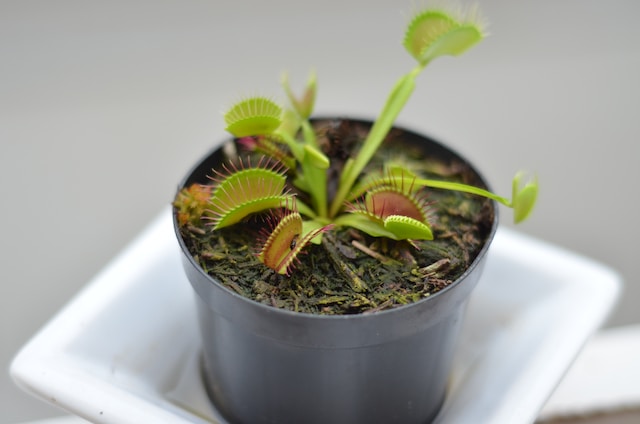
Depending on where you live, you may be able to leave your Venus flytrap outside to catch its own prey. I leave my flytrap outside in spring and fall since I live in Phoenix, Arizona, so it catches its prey on its own.
However, I bring it inside during summer since it gets so hot. When I do this, I still let it catch its own bugs by putting it outside under a grow light (to attract bugs) for a night or two every two to four weeks so it can feast, and then I bring it back inside.
Note: Venus flytraps do not need to eat during their dormancy period, which starts in late November and ends in early spring. Learn about Venus flytrap dormancy care to help keep your plant thriving.
If you want to feed your carnivorous plant yourself, here’s how:
- Select the right prey: Venus flytraps thrive on a diet of small insects and arachnids. The ideal size of the insect should be no larger than one-third the size of the trap. Common choices include moths, fruit flies, and small beetles. I tried mealworms but never had much luck getting my flytrap to eat them.
- Live prey is best: Venus flytraps respond best to live prey. The movement of live insects stimulates the hairs inside the trap and triggers it to close. You can use dead insects, but you’ll need to trigger the trap manually.
- Feeding procedure: Using a pair of tweezers, gently place the insect onto the trap. Be careful not to damage the plant in the process. If you’re using dead insects, lightly touch the inner surface of the lobes a few times to stimulate the sensory hairs and trigger the trap.
- Watch the trap close: This is the fun part: Once the sensory hairs are stimulated, the trap will snap shut, encasing the insect. If the insect is alive, its movements will continue to stimulate the hairs, causing the trap to close tightly and begin the digestion process.
- Patience is key: After the trap closes, the Venus flytrap begins secreting digestive enzymes that slowly break down the insect. This process can take up to 10 days. During this time, avoid disturbing the trap.
- Don’t overfeed: Each individual trap on a Venus flytrap can only open and close several times before it dies and falls off. Overfeeding can exhaust the plant. A good rule of thumb is to feed each trap once every two to four weeks.
Remember, Venus flytraps are naturally adapted to nutrient-poor environments, so they do not rely solely on prey for their survival. Ensuring they have proper lighting, well-drained acidic soil (a mix of peat moss and perlite), and access to clean distilled water is crucial for their overall health and well-being.
Feed Me [Spiders], Seymour
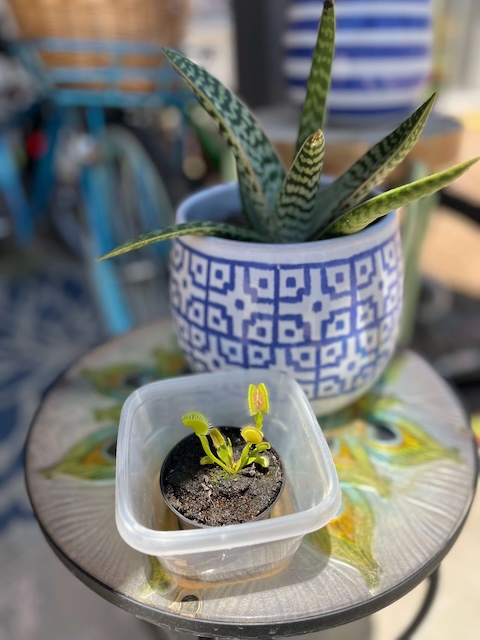
Now that I’ve answered the question, “Do Venus flytraps eat spiders?” you know these plants don’t discriminate when it comes to eating arachnids.
Personally, I think the best way to learn about your flytrap’s eating habits is to let it do its thing. If your region allows, keep your flytrap outdoors where it can catch its own food, and then take a look at what’s left in each trap once they reopen.
You’ll soon see these plants eat a smorgasbord of bugs, including spiders.
Frequently Asked Questions
What bugs can escape Venus flytrap?
While most small insects and bugs cannot escape once a Venus flytrap’s lobes close around them, some larger and stronger insects, such as larger beetles or spiders might be able to force the lobes open and escape. Also, very tiny insects like aphids may be too small to properly trigger the trap and could potentially escape.
What can Venus flytraps eat besides bugs?
Venus flytraps primarily eat insects and arachnids. They are not designed to digest larger animals, plants, or other types of food. It’s important not to feed them human food, meat, or any other non-insect items, as these can cause the plant to rot or die.
Can my Venus flytrap eat mosquitoes?
Yes, Venus flytraps can and do eat mosquitoes. If a mosquito lands on the trap and triggers the sensory hairs, the trap will close and begin the digestion process.
What kills a bug in a Venus flytrap?
After a Venus flytrap traps a bug, the plant secretes digestive enzymes into the closed trap that breaks down the bug’s soft tissues into nutrients. This process essentially dissolves the insect, killing it in the process. The Venus flytrap then absorbs the nutrient-rich liquid over several days.
Is the Venus flytrap an endangered species?
The Venus flytrap (Dionaea muscipula) is not currently listed as an endangered species. The U.S. Fish and Wildlife Service evaluated the need to protect the Venus flytrap as an endangered or threatened species but decided not to list it under the Endangered Species Act. This decision is due to successful conservation and management efforts, which have helped the plant thrive and avoid extinction. However, it’s important to note that the Venus flytrap is still considered at risk due to threats such as overcollection and habitat destruction.

3 comments
Comments are closed.