There’s no sugar-coating it — gnats are a nightmare. (A gnat-mare?) You see one hovering near your favorite indoor plant one day. The next day? 100.
Luckily, these rapidly reproducing nemeses of the plant world can be stopped if you act fast.
Today, I’ll teach you how to get rid of gnats in plants quickly, based on my years of experience as a houseplant lover and gnat hater. Whether gnats were hiding in the soil I bought (thanks, Home Depot) or snuck in when I took the cat out for a walk (yes, cats like walks too), I’ve unfortunately dealt with multiple houseplant gnat infestations.
After reading this article, you’ll know the best ways to get rid of gnats in everything from Venus flytraps to prayer plants. I’ll share various store-bought products and home remedies that actually work — plus the ones that don’t.
You’ll also get to see real pictures of my plants and how I use these gnat-killing methods on them.
First up: What fungus gnats are and how they multiply so dang quickly.
What Are Fungus Gnats?
Fungus gnats are small, mosquito-like insects that thrive in moist plant soil by feeding on organic matter and fungi. While adult gnats are mostly just annoying, their larvae can damage your plants’ roots.
The real problem? They reproduce at lightning speed.
This is why you need to act fast if you see even a few gnats hovering around one of your houseplants. They will quickly spread to your other plants, and you’ll have a full-blown gnat infestation on your hands.
How to Get Rid of Gnats in Plants (and Prevent Them From Coming Back)
This brings us to the real reason you’re here: the most effective ways to get rid of fungus gnats in plants (and your home).
Many of these remedies can be combined for the ultimate gnat-eradication plan of attack.
1. Bottom-Water Your Plants
If you really want to get rid of gnats in your house (and on your plants) quickly, bottom-water your plants instead of top watering. This lets the top inches of soil dry out so the gnats die but your plant lives.
Fungus gnats need moist soil to breed, and their larvae live in the top inch or two. Dry that layer out, and you kill them at the source.
Here’s how to do it:
- Keep it shallow — if the top layer gets damp, you’ve overwatered, and that’s exactly what you don’t want.
- Set the pot in a tray or saucer wider than the pot’s base.
- Pour a shallow amount of water into the tray and let the soil wick it up.
Here’s how I bottom-water my pothos. This pot came with a matching tray, but plant saucers are cheap at any home store or on Amazon:
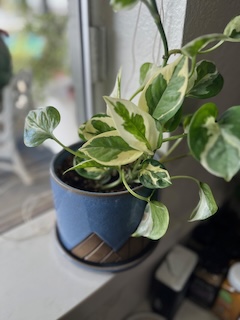
Withholding water altogether for weeks (which is what it would take to fully eliminate a gnat problem) isn’t an option for most plants, so bottom watering is a happy medium.
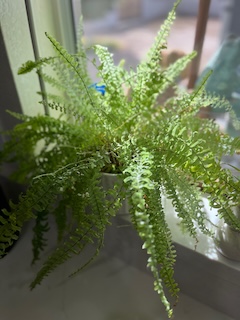
This is especially true for certain moisture-loving plants, like my fern here, that would quickly go downhill without water for even a week.
2. Use Plant Watering Spikes
Whether you have hanging plants or just aren’t into the bottom-watering method, plant spikes are a great alternative.
They’re exactly what they sound like — ceramic or glass spikes you fill with water and push into the soil. They release water slowly to the roots while keeping you in control during a gnat problem. Just monitor the topsoil: if it gets moist, water less.
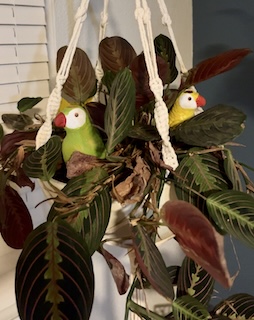
I’m obsessed with the cute parrot watering spikes I got for my hanging prayer plant. They hold a good amount of water, too!
3. Try Sticky Gnat Traps
This is an affordable gnat-killing method you can — and should — combine with any of the others on this list.
Put sticky traps in every plant you own, even (especially) the ones in other rooms that don’t seem to have gnats yet.
The setup couldn’t be simpler: Peel off the backing to reveal the sticky side and push the trap into the soil. You’ll see gnats stuck to it within a day. It’s great for prevention, too.
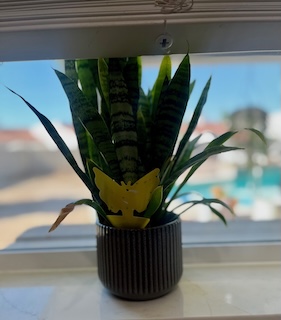
Here, you can see a sticky trap I have in my snake plant:
Pro tip: Not sure if a plant is infested with gnats? Tap the pot on the counter a few times. If gnats fly out, you’ve got them.
I also recommend fly paper on windows next to your plants. Gnats head for windows, so you’ll catch plenty as they fly out of your plants to irritate you and infest your other plants.
4. Get a Bug Plug-In Device for Counters and Outlets
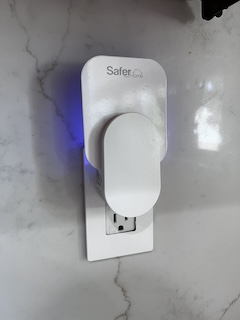
These are cheap and easy to find on Amazon. I keep one on my kitchen counter, where many of my plants live, plus a few plugged into outlets around the house.
They work like the sticky traps you put in plant pots, with one upgrade: they use light to attract insects, which then fly in, get stuck, and can’t escape. It sounds a little cruel, but we do what we must to protect our plants.
Here’s a small plug-in I have in my kitchen by the windowsill I’ve filled with plants. It does a great job at catching gnats and other things you don’t want flying (or crawling) around your home:
These plugins are also an easy way to see if you’re getting your gnat infestation under control.
As you use various remedies to get rid of gnats, you should see fewer bugs stuck on the plug-in.
I use these alongside the in-pot sticky traps for double the gnat defense (and a few other remedies on this list). If a plant gets gnats now, I can knock them out quickly before they spread to my other plants.
5. Put Cinnamon Sticks in Your Plants
Cinnamon has natural antifungal properties, so it helps suppress fungus and mold in the soil that gnat larvae feed on. Less food, fewer gnats.
I doubted this gnat-killing method for a long time, but I saw so many people swear by it in Facebook plant groups that I figured I had nothing to lose by trying it. I can now say from experience that it works.
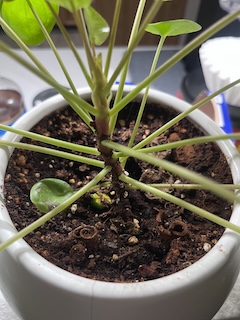
If you look closely, you can see two cinnamon sticks in my pilea here (but there are actually four or five total):
This works best as a year-round gnat-prevention tip, so don’t wait until a problem starts. If your plant already has gnats, just putting some cinnamon sticks in the soil won’t help. But if you do it before you get gnats, I do think it makes the soil less hospitable to them.
In fact, a new plant of mine got gnats (one I hadn’t yet put cinnamon sticks in), but the older plants that already had cinnamon sticks did not. Very Interesting!
Here’s how I use it:
- Small plants: 2 cinnamon sticks pushed into the soil
- Larger plants: 4–5 cinnamon sticks pushed into the soil
- Active infestation: Dust a light smattering of ground cinnamon over the topsoil
Use your discretion about the right cinnamon stick ratio for your plant’s size.
I have two cinnamon sticks in this smaller pilea:
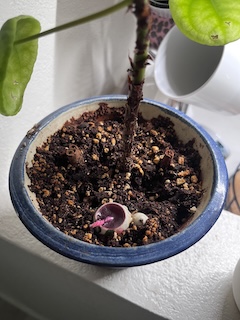
You probably have cinnamon sticks in your cupboard right now, so go put a few in your plants today. Bonus: your room will smell amazing for a few days
6. Water Your Plant with Mosquito Bits
This method takes patience, but it’s really effective. Mosquito Bits are corn cob granules coated with Bti (Bacillus thuringiensis israelensis) — a naturally occurring bacterium that’s lethal to gnat larvae but harmless to your plants, pets, wildlife, and you.
To use Mosquito Bits to kill gnats, soak the bits in your watering can, then water your plant with the Bti-infused water. The larvae eat it and die.
One thing about this method: It takes 3 to 4 weeks to fully work. This is because Bti only kills larvae — not the adults already flying around. You have to wait out the entire life cycle: every adult has to die off naturally (or via other methods on this list), and every egg they’ve laid has to hatch into a larva that then eats the Bti. Until that cycle completes, you’ll still see gnats.
That’s why this method pairs perfectly with sticky traps and plug-in devices (tips #3 and #4) — those help kill the adults while the Bti handles the larvae. For a stubborn infestation, combine it with quarantine (#8), too.
7. Get Carnivorous Plants
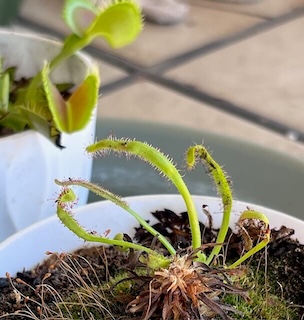
Carnivorous plants are amazing at getting rid of gnats in plants — especially sundews and butterworts. Plus, you get a super cool plant in the process.
Sundews’ sticky leaves are basically living flypaper, and fungus gnats are exactly the right size for them to catch. Put a sundew (beginner-friendly plant) or butterwort (slightly less beginner-friendly) near your other plants and watch as it gets covered with gnats.
Zoom in on my sundew plant here — all those black specks on its tentacles are gnats.
8. Quarantine Your Plants With Mosquito Netting
If you’re serious about getting rid of gnats as quickly as possible, isolate the infested plant so the pests can’t reach the rest of your collection.
Here’s how I do it:
- Buy mosquito netting from Amazon (look for the smallest amount you can find since you won’t need much)
- Place a water tray under your plant and drape the netting over it. Use a cardboard box as a frame if needed to keep the netting from resting on your plant.
- Place the plant under a grow light so it still gets light and won’t decline during quarantine.
- Pour a small amount of water into the plant’s tray through the netting so you never have to lift the cover and risk letting opportunistic gnats escape.
9. Try Diluted Hydrogen Peroxide
Diluted hydrogen peroxide applied to the soil kills fungus gnat larvae and eggs on contact — you’ll actually see it fizz. As a bonus, it breaks down into water and oxygen, giving your plant’s roots a little oxygen boost.
How to do it:
- Mix 1 part 3% hydrogen peroxide to 4 parts water.
- Let the topsoil dry out first, then use the mixture to top water as you normally would.
- Don’t do this repeatedly in quick succession — once is usually enough; wait and reassess before a second round.
A warning: this one is riskier. Too strong a ratio — or doing it too often — can burn delicate roots, and some sensitive plants don’t tolerate it well. Avoid it entirely on carnivorous plants. Stick to the ratio, and when in doubt, test on one plant first.
10. Repot Your Plant in New Soil
If you’ve tried everything else and you just can’t get the gnat problem under control, repotting is an option. While this should be a last resort, it’s a quick way to get rid of the gnats living in your plant’s soil.
Here’s how:
- Gently remove the plant from its pot
- Rinse every trace of the old soil off the roots (and plant as a whole) to remove larvae and adult gnats
- Repot in fresh, high-quality soil
Gnat Prevention Methods I Don’t Recommend
As for what hasn’t worked for me? Apple cider vinegar and dish soap traps. This did absolutely nothing except make my house smell like apple cider vinegar.
And the smell lingered (as did the gnats). No thanks.
I also used an all-natural Neem oil spray that killed one of my Pothos. Maybe I sprayed too much (although the guidance is to drench the soil and your plant’s leaves in it), or maybe it was just a terrible idea, but I won’t use it again.
So that’s why apple cider vinegar and neem oil aren’t on this list, although they are common home remedies for gnats.
Get Rid of Gnats in Your House (and Houseplants) Fast
If you have plants, you’ll have gnats at some point — it’s an unavoidable yet incredibly annoying part of being a plant parent.
However, now that you know how to kill gnats in plants, you can largely reduce or even eliminate occurrences with ongoing prevention.
Here’s what works for me:
- Everyday defense: Sticky traps in every plant, plug-in bug devices in outlets (with a big one by my largest plant grouping), and cinnamon sticks in the soil.
- At the first sign of gnats: Reduce watering to dry out the topsoil, and switch to bottom watering or plant spikes.
- If that’s not enough: Escalate to Mosquito Bits or diluted hydrogen peroxide, and quarantine the plant if needed. I’ll admit I get nervous with Mosquito Bits and hydrogen peroxide — not every plant responds well, and overdoing it can kill them. But sometimes it’s necessary. Luckily, using preventive methods can typically catch gnats before they become a big problem.
Happy gnat killing!